A Note Before Reading: In July 2026, I spent four days as a team captain at the Glimmer Hackathon (「微光黑客松」) hosted by Mingwan School in Shenzhen, where six students built a WeChat mini program called Niaozhen (「鸟圳」 — “bird” joined to the zhen of Shenzhen). This is the first piece in Students and AI: it records how the product came to be — what problem we wanted to solve, why we ended up focusing on birds, what we built, where we got stuck and how we climbed out. The next two essays draw out the education questions I most wanted to talk about from those four days. Compiled from the team’s daily minutes, client-interview transcripts, review recordings, and the final deliverables. All persons appear under pseudonyms.
1. One Team, One Client
Background first. The Glimmer Hackathon, hosted by Mingwan School in Shenzhen, ran from July 9 to 12, 2026, with over 230 students and over 70 captains. Its theme: creating for specific people in the age of AI. Each team faced one real client, working on topics ranging from visual impairment, hearing impairment, autism, and elderly parents who have lost their only child, to nature conservation and safety education — with four days to build a working product prototype.
My team was called Hack Doooooog: six students — E, team lead and timekeeper; Y, user research and client interviews; O and Ri, solution design; Ro and Z, hands-on build — and presenting counted as everyone’s job. Our topic was nature conservation. Our client, Ms. L, works on ecological restoration on Penguin Island (企鹅岛).

Before the hackathon, I wrote a five-piece Design Thinking Field Guide for the students: a student handbook, a teacher guide, a running case book, student worksheets, and an “AI Ground Rules Card” (「AI 使用底线卡」). The card has only five rules: never upload private information; never let AI fabricate interviews; verify the facts; disclose AI use; the decisions are mine. Much of what happened over these four days can be mapped back onto those five lines.
2. What Problem Are We Solving?
On the afternoon of day one, the team held two interviews with Ms. L.
Penguin Island is an artificial island built on reclaimed land. Ms. L’s job is to use nature-based solutions to nurse the island’s ecology back, bit by bit: first the baseline surveys — infrared cameras, acoustic monitoring, walking the same transect again and again counting birds — to establish what should be living here, and then deciding which trees to keep and which to cut.
What moved the team most in the interviews was not the methodology, but one of her frustrations. Tens of thousands of people work and live on the island every day, yet almost no one knows there are other lives on it. She said that when she used to ask children “what animals can we see around us,” the answer was cockroaches — German cockroach, American cockroach, recited in fluent detail — and nothing else. In her words: “What we actually come into contact with is far less than what truly lives around us.”
The problem surfaced: it is not that Shenzhen lacks nature. Nature is right overhead and in the street trees — and nobody sees it.
Then why does nobody see it? That same day, the team took apart seven comparable products — Dongniao (懂鸟), Ye Pengyou (野朋友), Guanniao Jun (观鸟君), Shihua Jun (识花君), Wren, iDolphin, and iNaturalist — answering two questions for each: What does it do? What can we borrow, and where must we differentiate? The conclusion pointed to one shared pain point: these products are heavy on tooling and light on fun. Professional, but teenagers cannot get into them. My feedback to the team on day two said the same thing: existing nature-education products are ones “people can’t understand and can’t get into, even though someone prepared them carefully and professionally.”
Hence the challenge statement finalized that day (excerpt, translated from the original):
Existing environmental-education content is too “hard”: professional but difficult, so teenagers won’t read it and can’t sit through it, and the knowledge never gets across. Our goal: make science content that teenagers are willing to read and don’t find boring — chew the professional content up for young people without losing its substance. Our solution: develop a “virtual bird-raising + points-and-growth” educational game.
3. Why Birds?
Ecology is a huge topic: mangroves, benthic organisms, insects, mammals — all of it falls within Ms. L’s work. Why did we narrow down to birds?
Because birds are the most visible wild animals in a city. You don’t need to crouch in a mangrove — look up and there is a Black Kite circling; the street trees hold Red-whiskered Bulbuls and Light-vented Bulbuls; and Shenzhen Bay is a famous stopover on migratory routes. Bird surveys are also part of Ms. L’s daily work, so both source material and expert fact-checking were within reach. For a four-day project, this was the reachable opening: make the topic small enough, and the work can be real.
That settled the content base: ten common Shenzhen birds — Light-vented Bulbul, Red-whiskered Bulbul, Oriental Magpie-Robin, Swinhoe’s White-eye, Spotted Dove, Crested Myna, Black-collared Starling, Cinereous Tit, White Wagtail, and Little Egret — grouped by habitat into urban woodland birds and wetland waterbirds.
4. What Niaozhen Does
Niaozhen is a WeChat mini program for learning Shenzhen’s birds. The core loop in one line: answer questions to earn points → spend points on feed for your bird → the bird levels up → new knowledge cards unlock → light up the field guide. Every other feature is decoration around this loop.
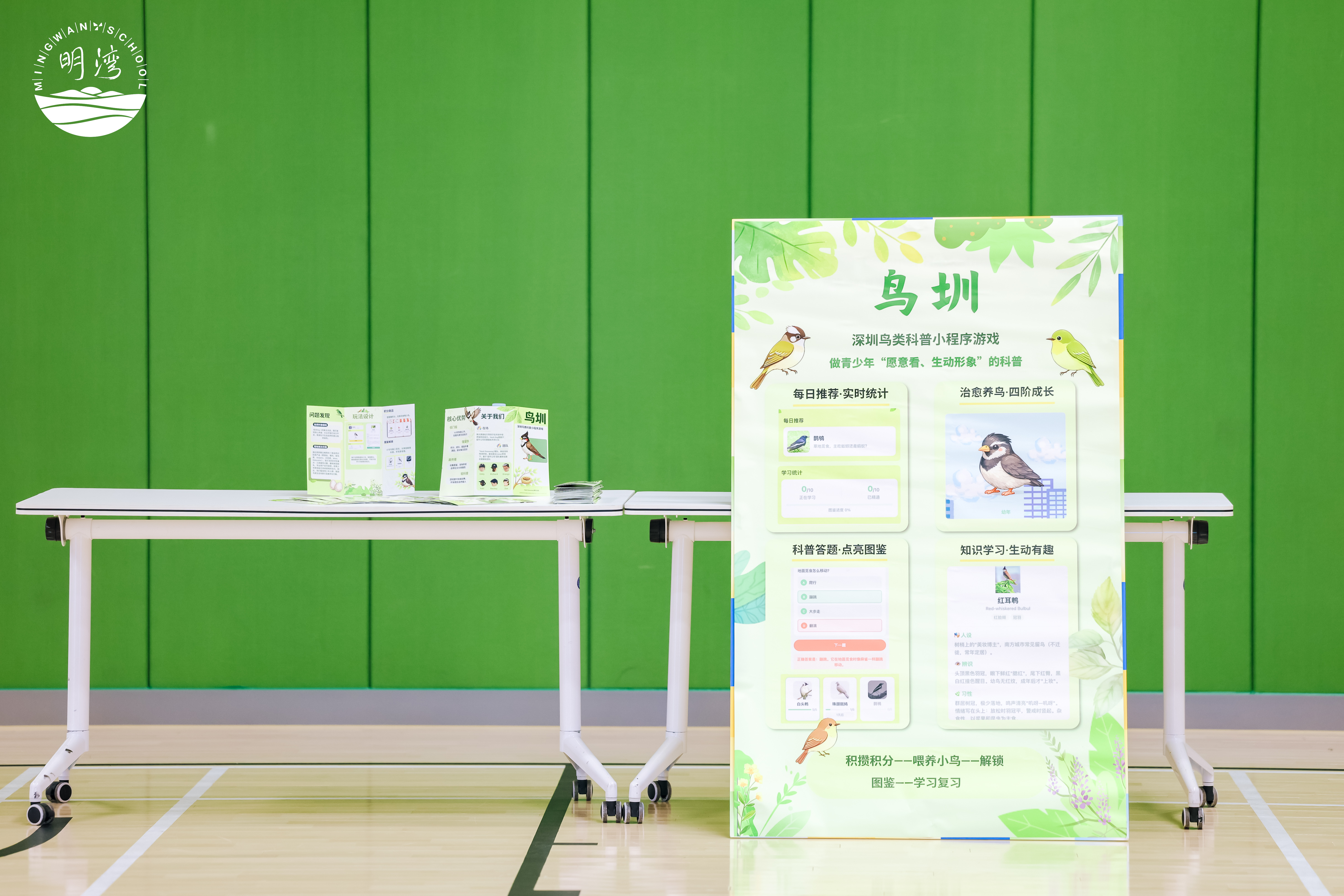
Its “science” hides in two places. One is the knowledge cards: each bird gets a set of cards in four sections — personality, identification, habits, fun facts — first making you feel the bird is interesting, then teaching you how to recognize it. The other is the question bank: ten questions per bird, one hundred in total, each with an explanation — getting one wrong doesn’t just pop up the correct answer; it tells you why.
Its “fun” is staked on nurture: start from a random egg; feed, level up, enter the field guide; birds you have learned light up, and the rest stay as gray silhouettes. A new user is given a hatchling and a first set of free knowledge cards on first open, completing the full answer→points→feed loop within thirty seconds — a taste of the reward first, then the learning.
And one feature was deliberately not built: streaks. The team explained why at the pitch: care for the environment should grow out of love, not anxiety.
5. What Went Wrong, and How It Got Fixed
Four days are never smooth. A few representative bumps.
Wanting too much. The first feature list had four learning entrances: quiz-based learning, photo bird ID, knowledge-base search, and keyword search — plus WeChat authorized login and mandatory check-ins. On the evening of day two, I ran a mock-pitch review for the team, and its core was one word: subtraction. The four entrances merged into a single quiz path; photo ID — high technical cost, hard-to-guarantee accuracy — moved to the future-plans page; WeChat login was cut, replaced with a nickname plus local storage; check-ins were cut. The same went for content — small and complete beats big and broken. At the end of the review, I told them: “This version already exceeds what I would require of an MVP; we’re just talking about how it could be even better.” The recording was transcribed that night, and the next morning the team iterated straight down the list.
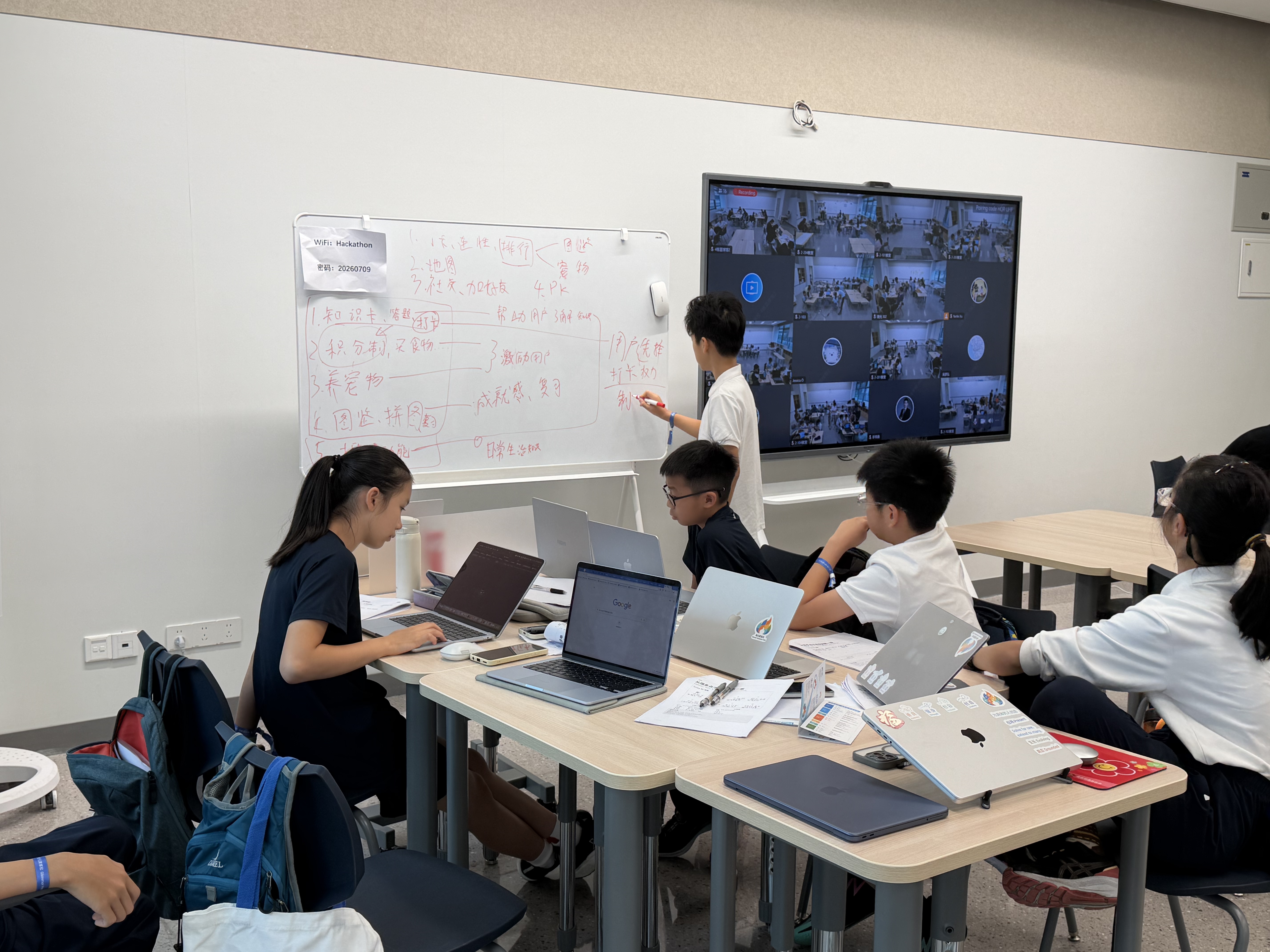
The illusion of “learned it.” The first prototype only quizzed immediately after learning — answering right after reading a knowledge card proves nothing about remembering. The review added delayed testing: random questions drawn from previously learned content, to keep short-term memory from faking mastery. The same review caught another detail: wrong answers only popped up the correct answer, with no explanation. My words were: “Your goal is that they learn the thing.” The explanation after a wrong answer is where the teaching actually happens.
The AI poster that couldn’t be printed. On day three, making the publicity materials, O generated them with AI first; the poster was passable, but the trifold’s three panels came out in different sizes and could not be printed. He moved into Canva and built it by hand over four or five hours; he named the finished piece “the most powerful poster in the world.” Then he fed the result back to the AI for improvement suggestions, and adopted them one by one, by hand, after discussion. The full version of this story is in Noticing Something’s Off — it later became the starting point of this entire series.
The version that wouldn’t change. The mini program’s code had changed, but it kept running like the old version. After a long round of troubleshooting, the cause was almost comic: nobody had pushed the code. The kids’ fix wasn’t “remember next time” — they had AI write a reminder into the README automatically on every update. Nobody taught them that; they came up with it themselves.
Export stuck at the last step. On the night of day three, the pitch video was edited but stuck at export: the editing software was an overseas product, and exporting required buying a certificate. E and I stayed behind in the classroom, trying one workaround after another, until we finally rented an account on Taobao for a day and rescued the video.
6. The Pitch, and After
July 12, pitch day. Before going on stage, the team voted to “send one representative.” My requirement was that everyone go up — what stands on stage is not a presenter but a team.
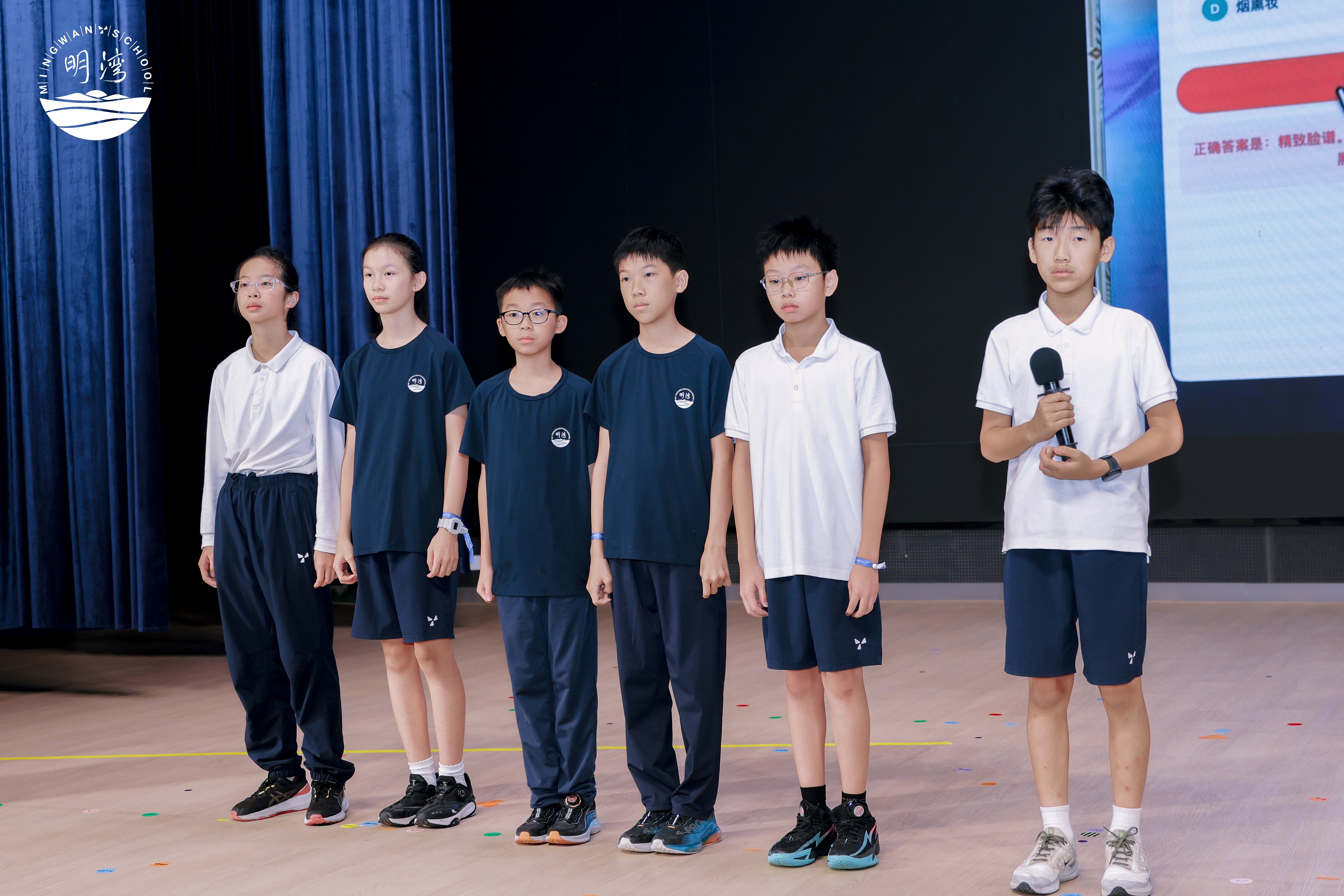
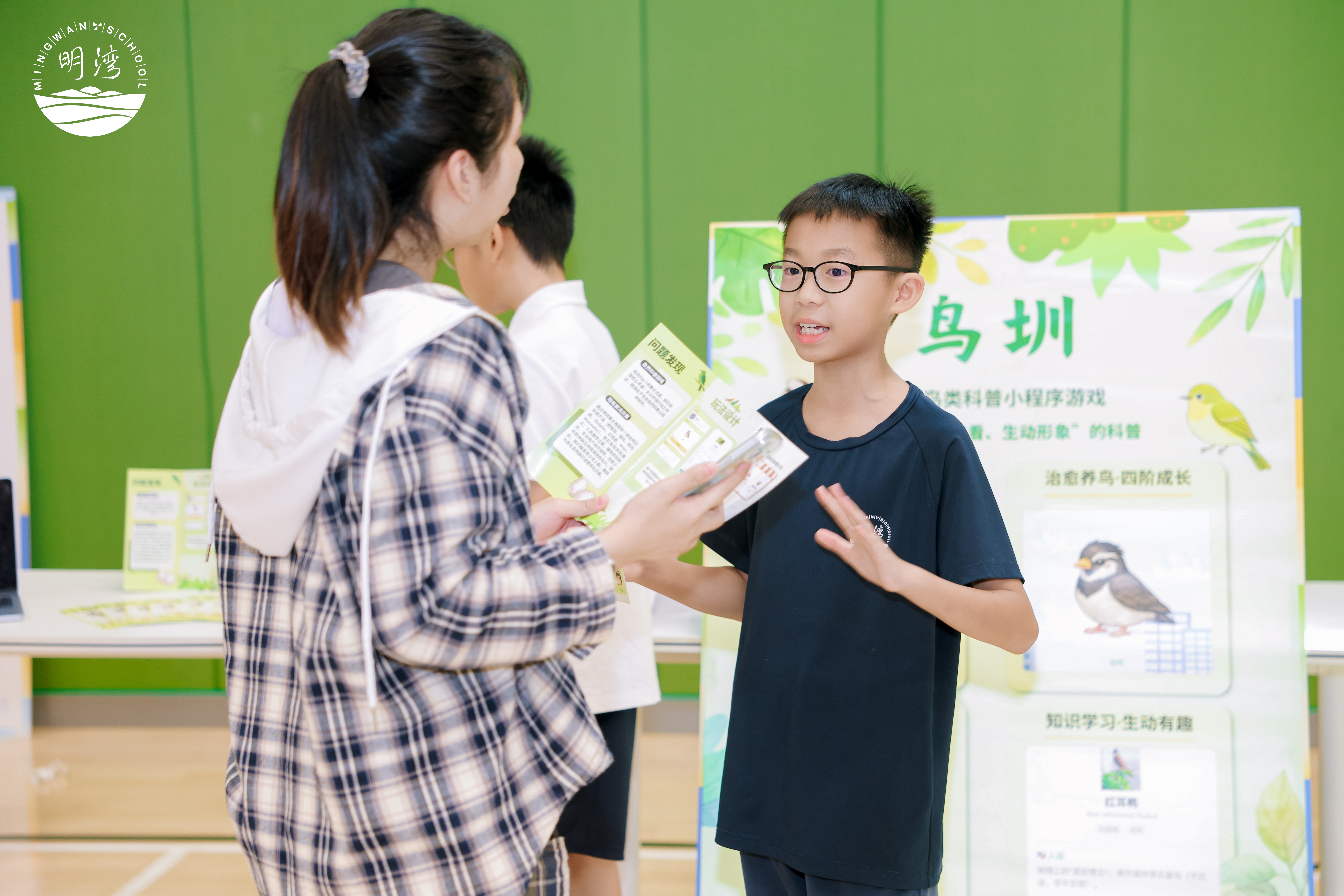
Niaozhen won the Glimmer Resonance Award (微光共振奖). Worth more than the award was the fair afterward: the students manned their booth and introduced their product, over and over, to visiting guests, teachers, parents, and judges — and collected a batch of concrete feedback in return: add phonetic notation for the rare characters in bird names; keep expanding the reference material. All of it went onto the iteration list.
After the event, Niaozhen was named in the hackathon’s official recap article. We also hold one hope: that when the school year starts, it can walk into classrooms and face real users.
Appendix: The Four Days
| Date | Phase | Key Output |
|---|---|---|
| July 9 | Understand the problem | Team formation, two client interviews, seven-product competitive scan, challenge statement finalized. |
| July 10 | Narrow the solution | Features locked, MVP build begins, evening mock-pitch review completed. |
| July 11 | Iterate intensely | Iteration down the review list, publicity materials, and video export. |
| July 12 | Present publicly | Pitch, fair, awards, and follow-up feedback collected for later iteration. |
Back to the series: Students and AI overview | Continue with The Scarcest Skills of the AI Era Don’t Have AI in Their Names | Noticing Something’s Off: What a Hackathon Taught Me About AI Literacy
This is the first piece in Students and AI, compiled by the author from the team’s process documents; all persons appear under pseudonyms. The use of photos on this page that show team members has been authorized by the team; for questions or takedown requests related to image use, please contact the author by email. For details and the statement on AI use, see the series overview page.