Over the past two years, I have written about teachers and AI: the teacher’s position in three AI documents, and what a teacher can do in a ten-year countdown. I have also built some tools — an AI Guide for Teachers, and a Design Thinking Field Guide for students. But one question has been hanging there all along, more fundamental than “what should teachers do” — what exactly should students learn?
This summer, I had a chance to look at that question up close. In July 2026, I led a team at a four-day student hackathon: six kids, one real client, and four days to build a working product prototype. AI was everywhere in those four days, and the kids used it more fluently than many adults. Precisely because I was watching from so close, judgments that had been abstract settled into concrete scenes — which skills are overrated, which are overlooked, and what “AI literacy,” a phrase said too often and too fast, should actually mean once we slow it down.
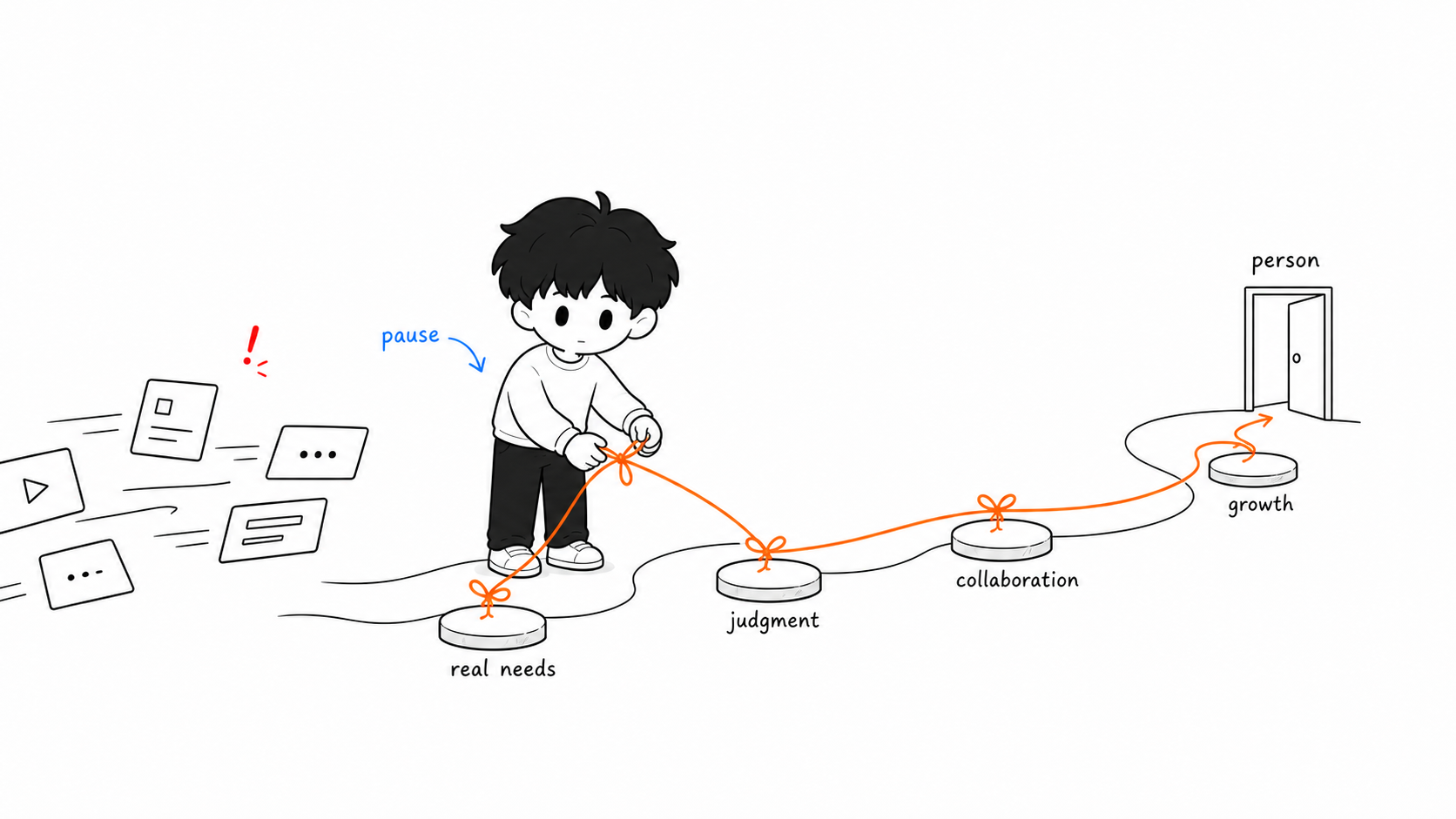
This series is what came out of those four days. It does not attempt a complete answer; it only wants to talk a few questions through. The first piece returns to the field and records how Niaozhen moved from client interviews and problem framing to the final pitch. The second is for parents and educators: when everyone looks toward new skills with “AI” in their names, which older skills are quietly becoming scarce? The third starts from a poster that took four or five hours to make by hand, a kid who could not say where the “ugly” was, and where the line between fast and slow runs.
You can start with any piece: begin with the first if you want the full process, with the second if you want the argument, and with the third if you want a field story about judgment and expression. Below, there is only one series entrance; the series may keep growing — “what should teachers do,” for instance — and once written, it will appear here.